East to west, north to south, there is a quiet, steady rhythm to our free medical outreaches that hasn’t gone unnoticed: hypertension is sweeping through our communities silently; it is detected in fleeting moments, yet it is left largely unaddressed. More concerning is the fact that what was once considered “the disease of the elderly” is gradually becoming the new normal in younger populations. So, we asked ourselves, “How do we bridge the chasm between a routine screening in an underserved community and a life-saving medical diagnosis?” Answering that question took us all the way to the heart of the nation’s capital.
From November 10 to 12, 2026, the Transcorp Event Centre, Abuja became the epicentre of visionary health dialogue as health leaders, policymakers, researchers, academics, religious leaders, civil society organizations, changemakers, and development partners from across Nigeria converged for the Nigeria Health Sector-Wide Joint Annual Review (JAR) convened by the Federal Ministry of Health and Social Welfare through the Sector-Wide Approach (SWAp) Coordinating Office. Held under the banner “Together to Higher Grounds” and guided by the powerful theme “Make Good Evidence Count,” this year’s Scientific Session served as a critical milestone in evaluating the final phase of the Health Sector Strategic Blueprint (HSSB) 2023 – 2027 and advancing progress toward Universal Health Coverage (UHC), turning frontline realities into actionable policy.
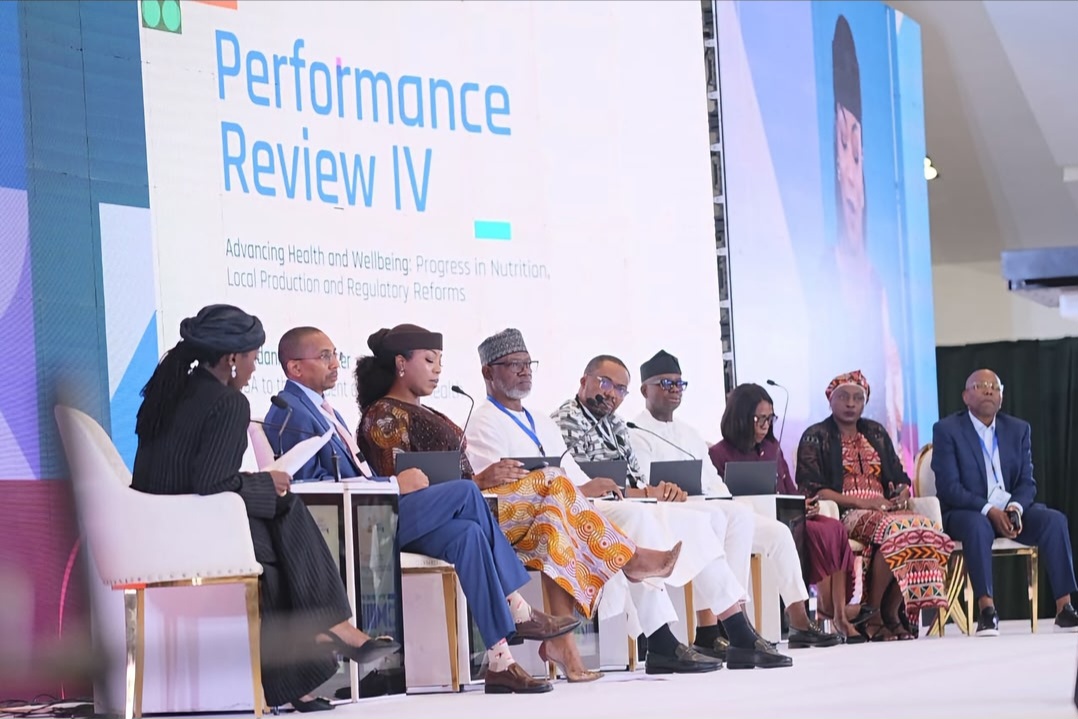
For JEF, this year’s JAR was a historic moment that brought us to the table of the national discourse. Our landmark poster presentation holds up a mirror, confronting one of the most salient yet pervasive threats to public health in Nigeria today and challenges the entire sector to do better.
Detected But Not Diagnosed: Bridging the Invisible Divide
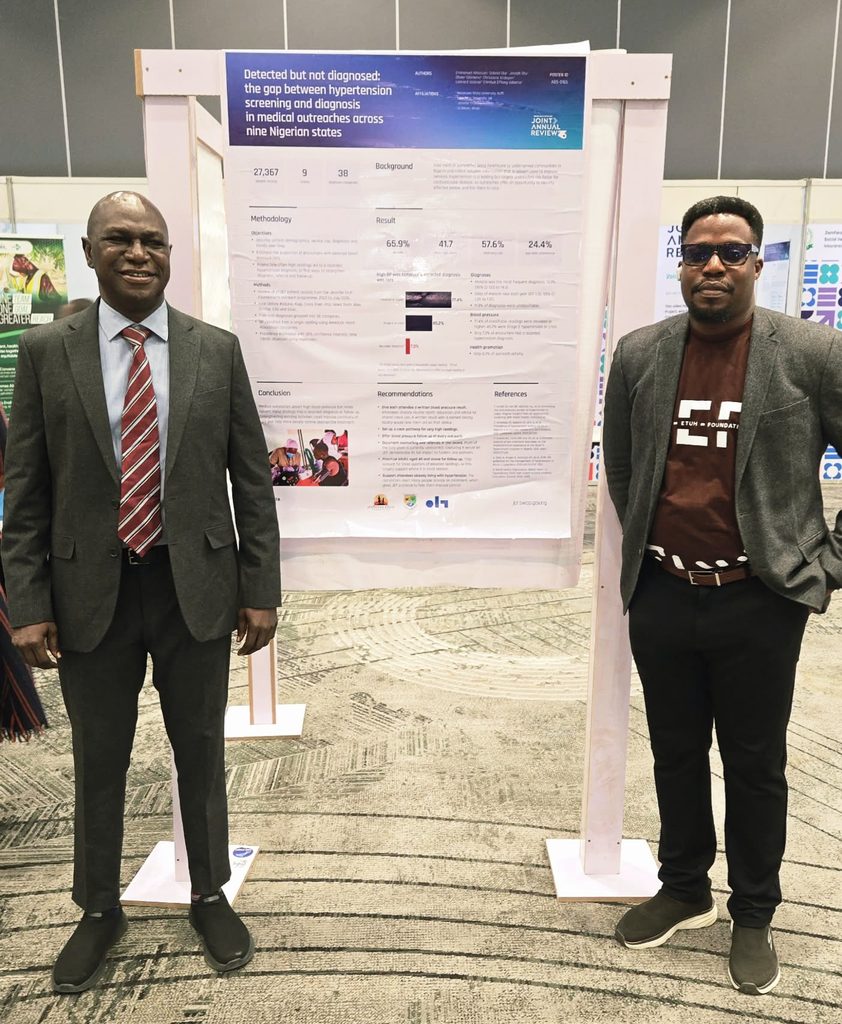
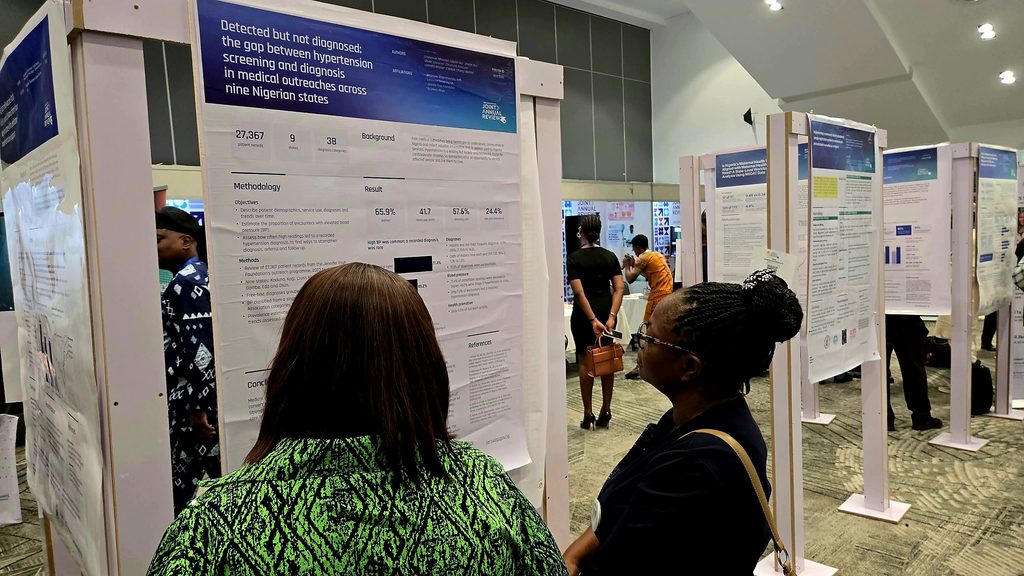
JEF’s poster presentation titled “Detected but not diagnosed: The gap between hypertension screening and diagnosis in medical outreaches across nine Nigerian states,” told a striking human story demonstrated through numbers.
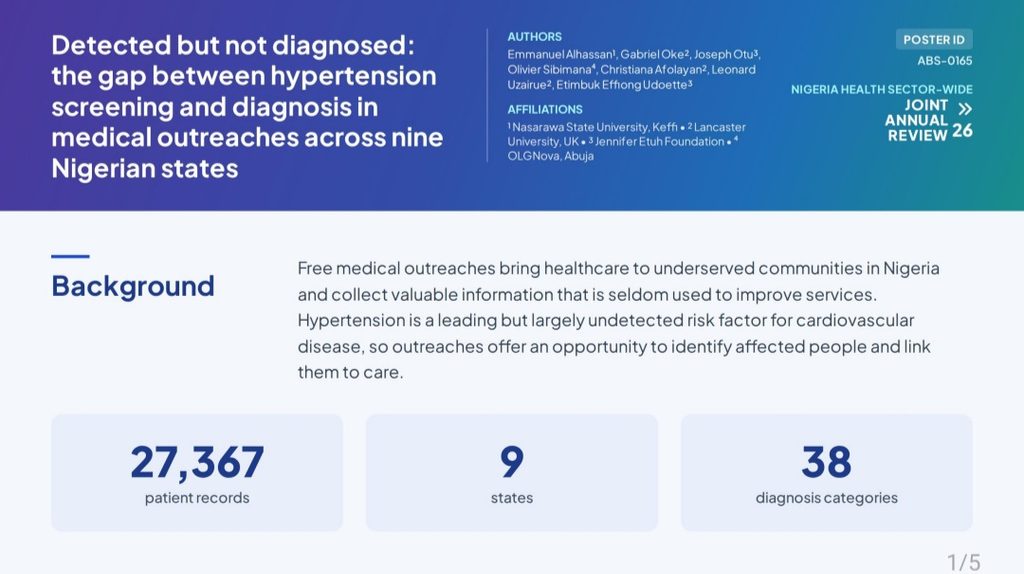
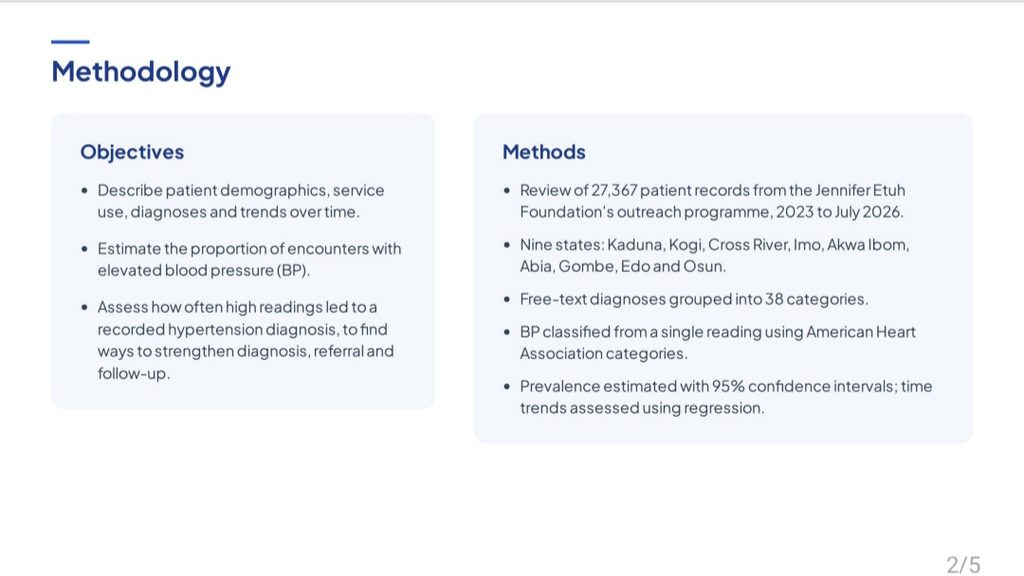
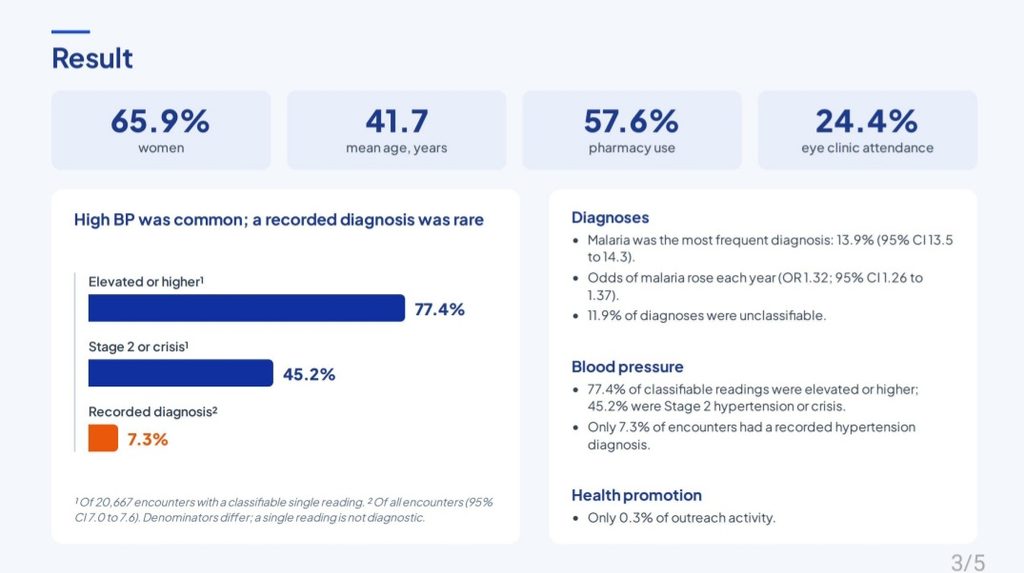
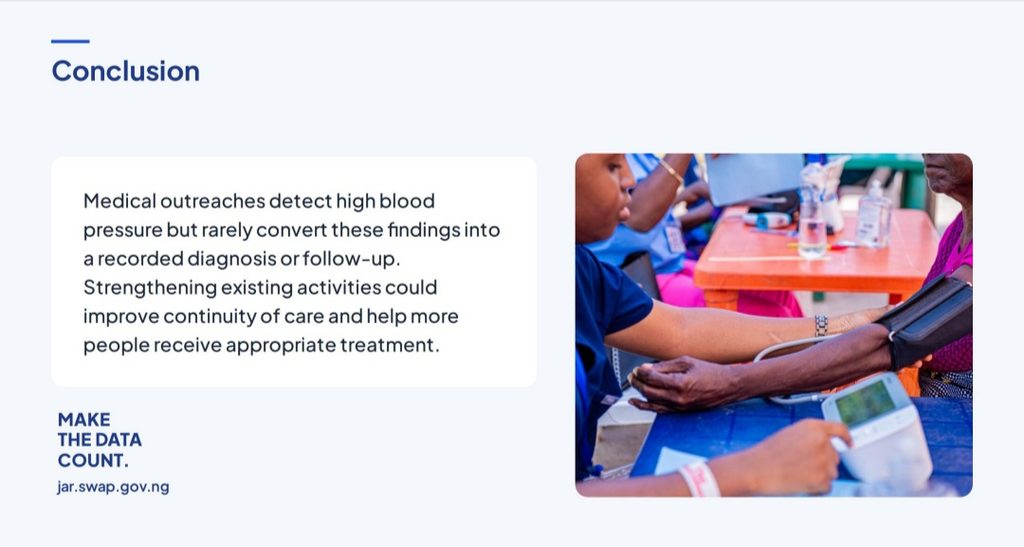
Drawing from a robust retrospective review of 27,367 medical records collected across our medical outreaches in nine states; Kaduna, Kogi, Cross River, Imo, Akwa Ibom, Abia, Gombe, Edo, and Osun, between 2023 and July 2026, the findings uncover a staggering reality:
- The High Burden of Risk: Of the 20,667 patient encounters with classifiable blood pressure readings, a whooping 77.4% were elevated or higher, with 45.2% sliding into Stage 2 hypertension or crisis.
- The Diagnostic Disconnect: Despite these dangerously high numbers and the overwhelming prevalence, only 7.3% of all encounters had a recorded hypertension diagnosis.
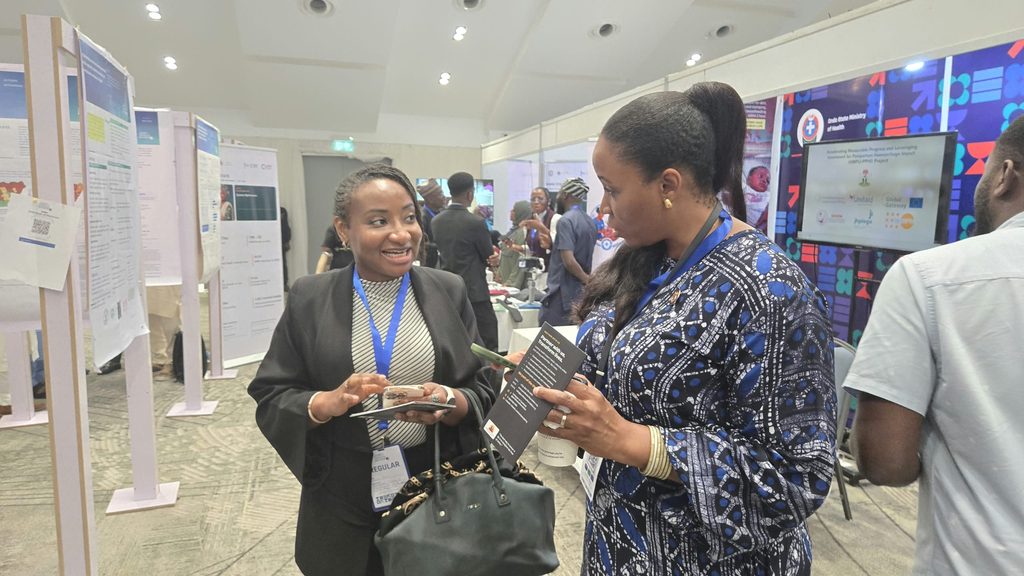
A Vision Set to Transform the Nigerian Health Sector
Imagine standing before thousands of individuals whose bodies are carrying the silent, crushing weight of high blood pressure only for the healthcare system to stop at the screening table. Free medical outreaches have long excelled at bringing services to underserved populations, distributing medication, and offering brief consultations, but they historically struggle with longitudinal continuity. This study uncovers a heartbreaking truth and underscores an urgent call to action: finding a problem is not the same as fixing it. Without integrating regular blood pressure checks, structured follow-ups, clear referral pathways, dedicated health education, systematic diagnosis recording, and continuity of care, we risk leaving patients stranded between detection and actual survival. Community-based medical outreaches must, therefore, evolve beyond one-off screenings to successfully bridge the gap between screening and clinical management, transforming outreaches into genuine lifelines for cardiovascular health.
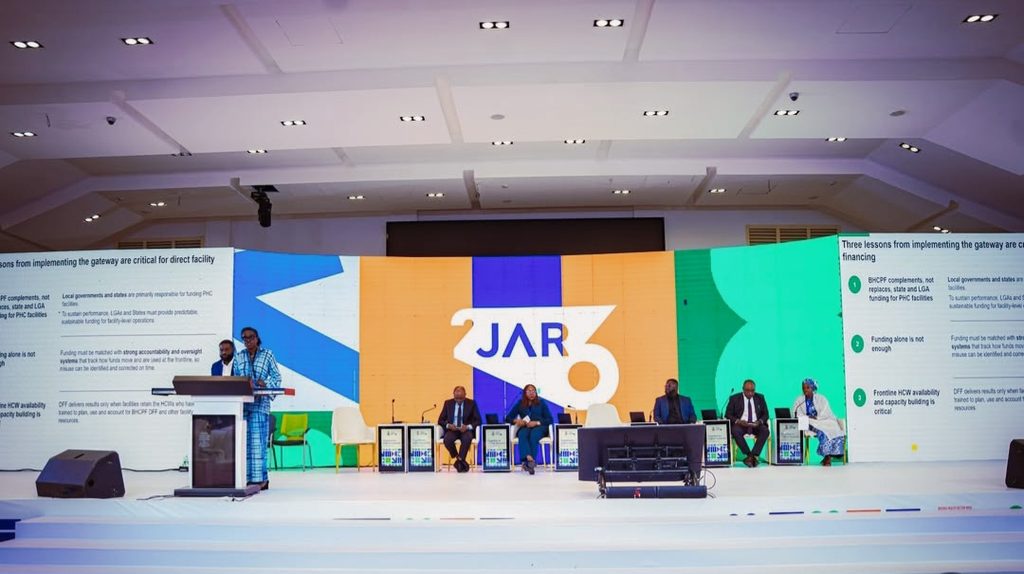
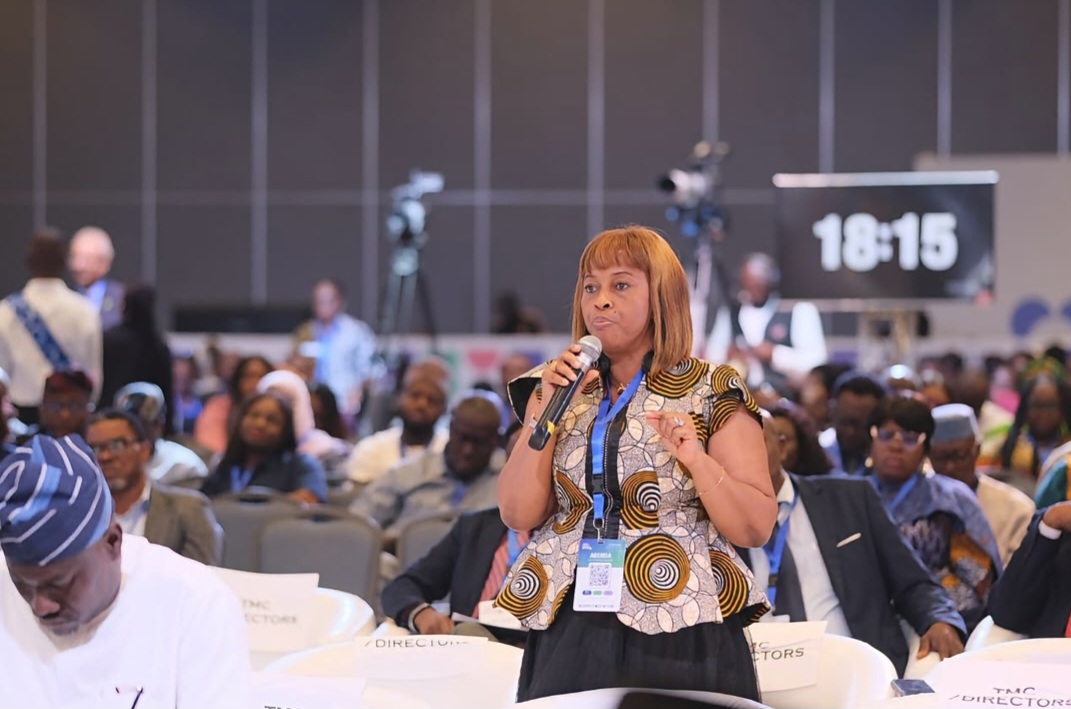
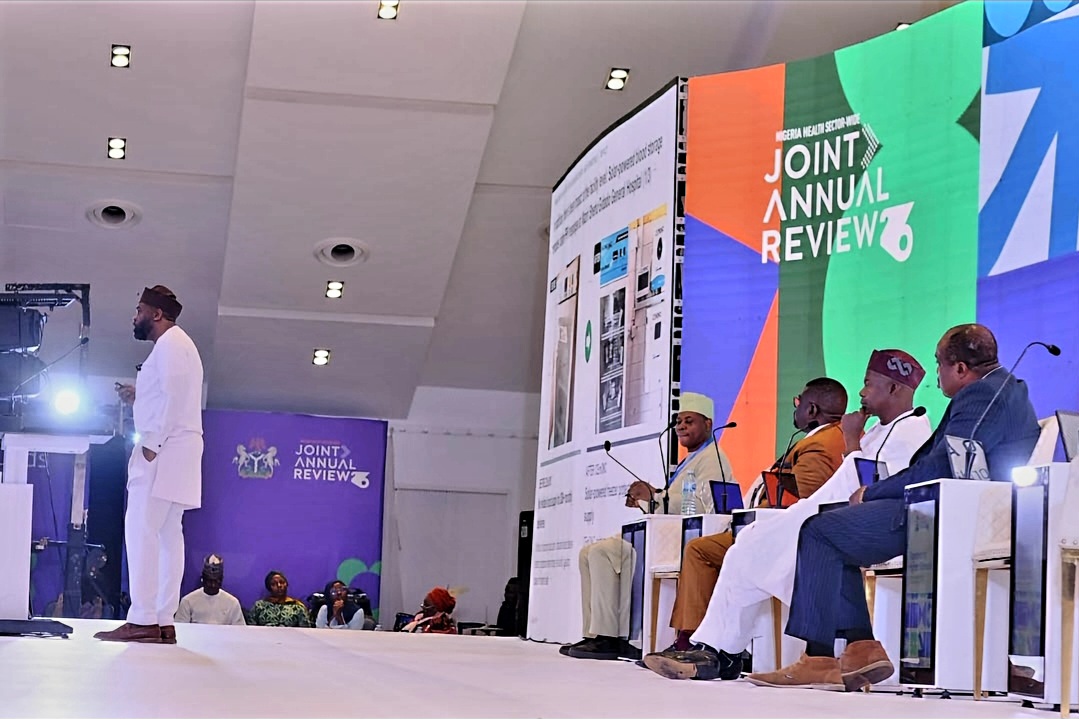
The significance of JEF’s contribution is amplified when viewed against the broader canvas of the 2026 JAR, convened around a unified message: sustainable health transformation requires rigorous evidence, domestic resource mobilization, and deep community engagement. JEF’s research sits precisely at this intersection pairing grassroots community engagement with hard data analytics.
This milestone is a profound reminder of why we do what we do and a testament to our growing influence and thought leadership in Nigeria’s health sector. It is a clear demonstration that JEF’s footprint extends far beyond temporary relief; we are generating the empirical evidence needed to guide Nigeria’s health sector toward systemic transformation while shaping national policy conversations and this responsibility challenges us to rethink how medical outreaches should be run.
The Journey Ahead
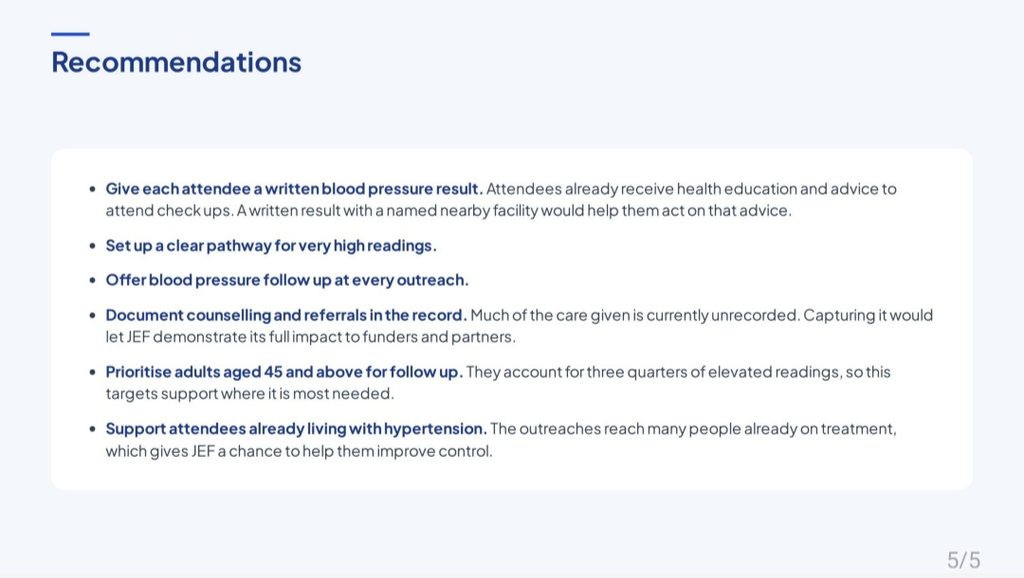
If numbers tell us where we stumbled, action tells us the direction we should be going. As we look beyond the 2026 JAR, the insights from the presentation offer a clear roadmap for our future outreaches:
Closing the Loop: Transforming our medical outreaches so that a high blood pressure reading automatically triggers a warm referral, a structured tracking plan, and a connection to local health facilities.
Deepening Community Trust: Ensuring that health education and regular check-ins become as routine as the initial screening, empowering patients to understand and manage their own cardiovascular health.
Deepening Sectoral Collaboration: Utilizing industry insights such as those contained in this study as well as collaborating with relevant stakeholders under the SWAp framework, proving that civil society and philanthropic organizations can lead the charge in evidence-based healthcare.
We admit that the journey to a healthier Nigeria is rugged, but we are not deterred. With heart and relentless dedication, we areturning data into action, and action into a healthier future for Nigeria.
References
- Amadi CE, Ale OK, Okorafor UC, et al. Unmasking the contemporary burden of hypertension in Lagos, Nigeria: insights from an opportunistic screening, BMC Public Health. 2026;26:634.
- Nwankwo M, Makeno W, Idris A, et al. Prevalence of Hypertension among adults in Nigeria: a systematic review and meta-analysis. BMC Cardiovasc Discord. 2026;26:330.
- Husain MJ, Toma MM, Eze SV, et al. A thematic analysis of key informant interviews on the implementation experience at the HEARTS hypertension program in Nigeria. Glob Heart. 2026;21[1]:49.
- Ooku A, Kruger A, Asomoah KT, et al. 2026 ISH guidelines for the management of hypertension in Africa. J Hypertens. 2026:44[10]1732-1760
- World Health Organization, Global report on hypertension 2026: high stakes: turning evidence into action. Geneva: WHO: 2026