A nation’s greatest resource is not its natural wealth, infrastructure, or institutions. It is its people, and people cannot learn, work, innovate, or contribute to society when poor health limits their potential and productivity. Across Nigeria and much of the developing world, access to quality healthcare remains a significant challenge, particularly in rural communities: distance to health facilities, shortage of healthcare professionals, inadequate infrastructure, limited health education, and financial barriers continue to prevent many people from receiving timely care. The consequences cause many to suffer from preventable illnesses and avoidable deaths. Unfortunately, governments and families end up paying for this heavily through lower productivity, higher healthcare costs, poorer educational outcomes, and slower economic growth because health does not compete with development priorities; it enables them.
Nowhere is this truer than in rural Nigeria, where agriculture, local commerce, food security, and community resilience depend on a population healthy enough to sustain them. In essence, when rural communities lack access to care, the effects ripple across entire economies: household incomes shrink, school attendance drops, and communities become more vulnerable to poverty and economic shocks they might otherwise have weathered. This is because a country’s development cannot outpace the health of the communities that sustain it.
A Promise Nigeria Has Yet To Keep
In 2001, African Union member states meeting in Abuja pledged to allocate at least 15% of national budgets to health. Sadly, Nigeria has never come close. A two-decade review by Partnership for Advocacy in Child and Family Health at Scale (PACFaH@Scale) found that the country’s average allocation across twenty years sat at roughly 4.7%, and never exceeded 7% even with supplementary funding streams. The last five federal budgets tell the same story in sharper context. In 2021, at the height of the COVID-19 pandemic, when health systems worldwide were being tested, Nigeria allocated about N547 billion to health, roughly 4.5% of the total budget. Between 2022 and 2025, the allocation rose to 5.8%. Yet, the proposed 2026 allocation at N2.48 trillion against the N58.47 trillion national budget represents only about 4.2%, meaning that even as figures rose, health’s share of the national purse fell.
However, allocation is only half the problem, as Nigeria has a parallel crisis of utilisation. A review of capital health budgets found that in 2024, just over 15% of N434.8 billion allocated was released. This shows that money appropriated for health is routinely returned to the treasury unspent, even as facilities sit unequipped, understaffed; challenges in the health sector keep increasing; brain drain, popularly known as the “japa syndrome,” is shooting up; health workers receive poor welfare; industrial actions exist; and global health funding is declining.
The cost of this chronic underfunding does not disappear; it is simply transferred from the federal budget to households, causing out-of-pocket spending to rise. Out-of-pocket spending accounts for 76% of Nigeria’s total health expenditure, which is among the highest ratios in the world and is far above the recommended threshold for lower-middle-income countries. In practical terms, this means that for most Nigerians, healthcare access is determined less by policy than by what they can afford to pay out of their own pocket, in the moment they need it most.
The Cost of Waiting Until People Become Sick
One of the greatest weaknesses of many health systems, including Nigeria’s, is their focus on illness rather than wellness. Too often, resources are concentrated on treating diseases after they occur rather than preventing them in the first place. This makes the response reactive instead of proactive. However, community health interventions challenge this reactive approach. They operate on a simple but transformative principle: the most effective health crisis is the one that never happens. This is where preventive healthcare comes into play. Preventive healthcare includes immunisation campaigns, maternal and child healthcare services, nutrition programmes, disease screening, sanitation initiatives, health education, and community outreaches. These interventions reduce risks before they become emergencies.
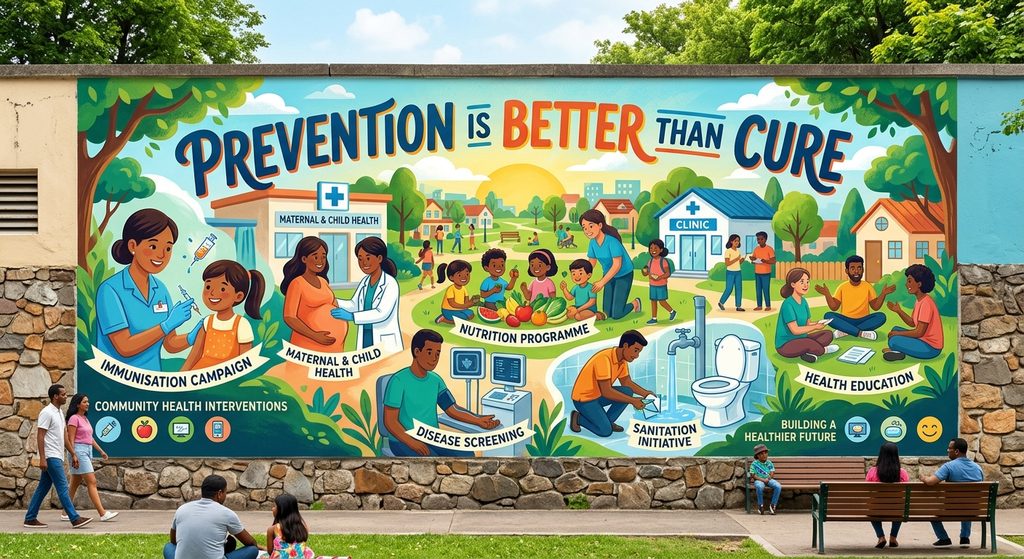
Every vaccination administered, every expectant mother supported, every health education session conducted, and every community health worker trained represents a crisis prevented rather than managed. Preventing illness is not only more humane, it is also, by a wide margin, the most cost-effective investment for governments managing limited resources and donors seeking sustainable impact.
Research examining healthcare access among rural households in Nigeria found that only a small proportion of households had adequate access to essential healthcare services, while the majority faced moderate or inadequate access. These disparities continue to affect health outcomes and limit progress toward universal health coverage. In Kano Municipal, residents told a town hall convened by Nigeria Health Watch that primary health centres close at night, forcing women in labour to travel long distances in the dark, often without transport. A resident of Yakasai community, Khadija Abubakar Muhammad, captured it clearly: “When labour starts in the evening, the PHC is closed. They only refer us to another facility far away. We need our centre to run 24 hours so that no woman gives birth on the road.” This is a small request that captures a huge failure.
Universal Health Coverage: The Unfinished Promise
According to the tenets of Universal Health Coverage, everyone everywhere can access quality health services without being pushed into financial hardship to pay for them. On paper, Nigeria has built much of the legal architecture for this: the 2014 National Health Act created the Basic Health Care Provision Fund, financed by a minimum of 1 percent of the Consolidated Revenue Fund. In 2022, the National Health Insurance Authority made health insurance mandatory for all citizens and legal residents, targeting universal health coverage by 2030. The architecture exists, but the coverage doesn’t yet. As of September 2026, national health insurance enrolment has surpassed 23 million people, a fraction of a population that exceeds 220 million. The fact that the Basic Health Care Provision Fund has helped revitalise more than 900 primary health centres, with over 2,700 more under upgrade are worth acknowledging; however, these are only a fraction of what universal coverage requires.
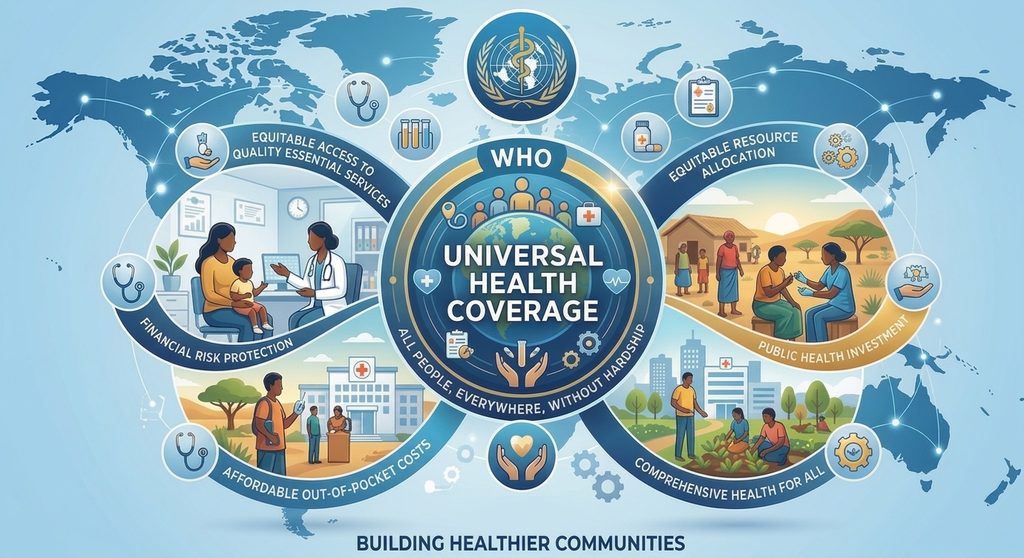
This is why community health interventions are not a separate conversation from universal health coverage; they are its delivery mechanism. A national insurance policy means little to a woman in a rural ward whose nearest primary health centre is closed at night when she needs it, or a family in a displacement camp with no facility to reach at all. This underscores the fact that policy can mandate coverage from the federal capital, but only community-based outreaches, primary health centres, and trained local health workers can make that coverage real in a ward, a village, or a camp. And until the last mile is funded as seriously as the legal framework has been written, universal health coverage in Nigeria will remain an aspiration captured in policy documents rather than a fact lived by ordinary people.
Rwanda’s Lesson: Evidence That Community Health Works
One of Africa’s most compelling examples of successful community health investment comes from Rwanda. Beginning in the early 2000s, the country trained and deployed an estimated 45,000 community health workers to deliver antenatal care, safe delivery support, postnatal follow-up, and family planning education at the household level. The results have been measurable: Rwanda’s maternal mortality ratio fell from 1,007 maternal deaths per 100,000 live births in 2002 to 259 deaths per 100,000 live births in 2020, and its under-five mortality rate, which stood at 152 per 1,000 live births in 2005, has since fallen to 36, according to the country’s most recent Demographic and Health Survey.
The lesson is clear; healthcare becomes more effective when it reaches people where they live, and it does so at a fraction of the cost of treating the emergencies that prevention avoids.
Sustaining Community Health: JEF’s Approach
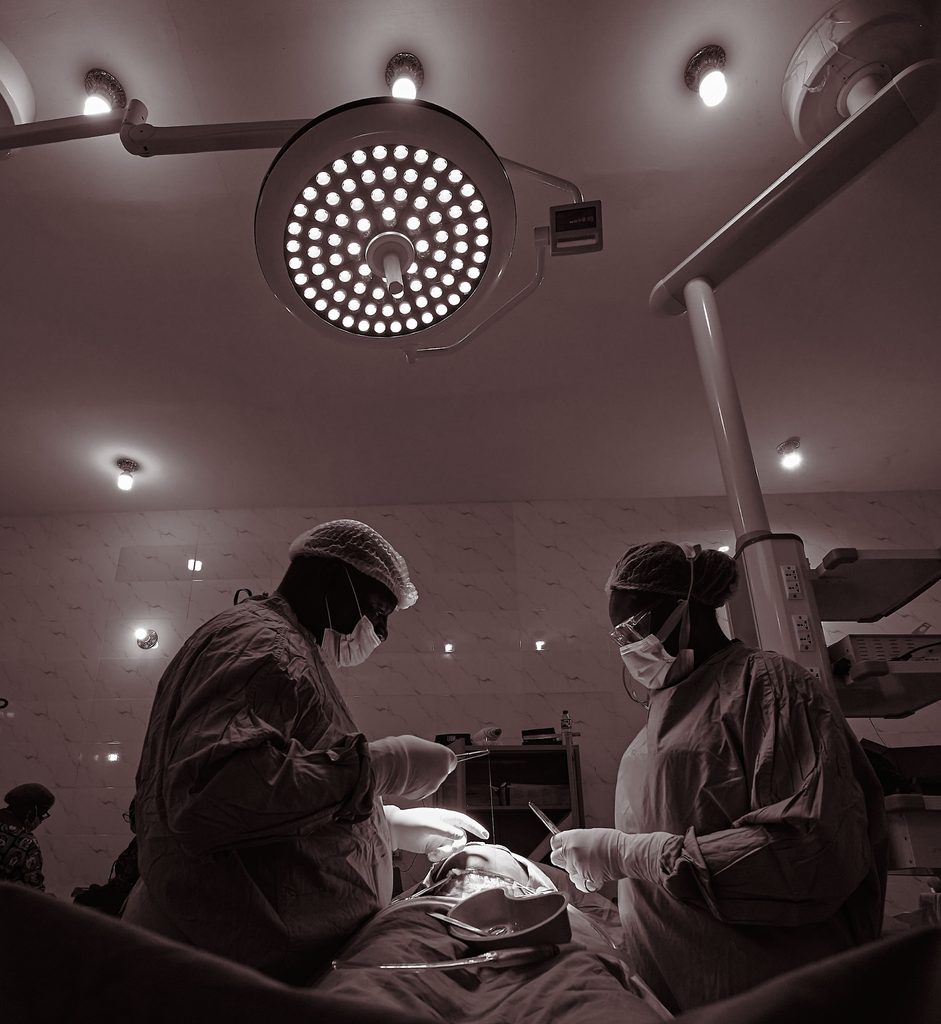
Development takes different forms, but ultimately, it happens within communities when a mother receives quality antenatal care, when a child receives lifesaving immunisations, when a farmer completes an entire planting season without preventable illness or threat to life, when a health centre stays open through the night, and stays standing when conflict reaches its town. This is the model Jennifer Etuh Foundation has built its work around. Through free medical outreaches carried out across Nigeria’s six geopolitical zones, JEF brings screening, treatment, vaccination, and health education directly into communities that would otherwise wait for care that hardly arrives. Our work is deliberately preventive as much as curative: vaccination drives for zero-dose children and those susceptible to cervical cancer, health education sessions that reach people before illness sets in, and screenings that catch conditions early rather than after they’ve become emergencies. It is Rwanda’s lesson applied to the Nigerian terrain, proof that the last mile can be covered, community by community, even while the national financing conversation continues.
The Development Question We Should Be Asking
For decades, development conversations have asked: how do we create jobs, improve education, grow economies, and reduce poverty? These are important questions, but perhaps the more fundamental question to ask is, “how can people participate in development if they are not healthy enough to do so?” Health is not simply another development sector; it is the bedrock upon which every development ambition stands. When communities are healthy, children learn, businesses grow, families prosper, and nations become more resilient to economic shocks and insecurity. Conversely, when communities are unhealthy, progress slows, opportunities diminish, and development gains become fragile.
The future of Nigeria’s development will not be determined solely by the roads built, the policies enacted, or the investments attracted. It will also be determined by whether the country closes the gap between the Abuja Declaration of 15% budget allocation promised in 2001, the universal coverage promised by 2030, and what has actually been funded and delivered. In essence, supporting community health programmes is not merely an act of compassion; it is one of the most direct investments a nation, or its partners, can make in its own future.