The crowd erupted in applause as the ribbon was cut. Women ululated. Government officials delivered speeches about progress and partnership as a newly constructed water facility stood proudly at the centre of a rural village. Community leaders smiled for the cameras. For the development organisation behind the project, this was a milestone worth celebrating. Reports described it as a “high-impact intervention” that had brought access to clean water closer to “thousands of residents.” Every word of it was true. But standing quietly at the edge of the crowd was 13-year-old Amina. Every morning before sunrise, Amina lifted an empty container almost half her size and walked several kilometres to fetch water for her family. The journey was exhausting; during the rainy season, the paths were muddy and dangerous, and during the dry season, the heat arrived early and was unforgiving. Most mornings, she missed the first lessons in class entirely.
When news spread that a water facility was being built closer to the community, everyone believed life was about to change, and in some ways, it did. The distance to clean water was reduced significantly, and cases of waterborne diseases reportedly declined. The project achieved its “technical objectives” but nobody designing the intervention had considered one critical detail: the water point closed before Amina returned from school each afternoon. So, despite the glowing reports and successful commissioning ceremony, Amina’s reality barely changed as she still woke before dawn carrying the burden the project was supposedly designed to remove.
The project succeeded statistically but for the girl most affected and others like her, development had not yet arrived. This is the danger of exclusion but it is not a story about one girl in one village; it is a story about how poverty statistics shift while the people those statistics represent stay exactly where they are when development is designed for people rather than designing it “with” them. This isn’t peculiar as across Africa, development is accelerating: infrastructural development is taking place, healthcare programs are expanding, education initiatives are scaling, and economic interventions are reaching millions. Yet beneath this tangible progress lies a more fundamental question, one that determines whether development is truly transformative or merely performative:
Who does development actually serve?
As was the case with Amina, some development projects improve systems technically while excluding vulnerable populations in practice. Therefore, development that does not intentionally account for women, children, persons with disabilities, widows, rural populations, and other vulnerable or marginalised groups, doesn’t just fall short, it fails as inclusive development is not charity; it is justice.
The Cost of Exclusion
Exclusion is not neutral; it is economically and socially destructive. Across Sub-Saharan Africa:
- Women remain significantly underrepresented in formal employment and access to finance
- Millions of children are still out of school, particularly girls in rural and conflict-affected regions
- Social protection systems, where they exist, cover only a fraction of vulnerable populations
The consequences of these are profound:
- Lost economic productivity: When women are excluded from economic participation, entire economies operate below their productive capacity.
- Intergenerational poverty: When children lack access to education and healthcare, poverty doesn’t just persist it deepens and transfers, generation to generation, with compounding force.
- Social instability: When vulnerable populations are left without social protection, the development gains of good years are erased in a single crisis as inequality widens, distrust grows, and instability deepens.
In simple terms: no society can prosper or outgrow the exclusion of its people as exclusion is never neutral. It is always expensive and someone always pays.
Rwanda: Gender Inclusion as a National Development Strategy
Few countries illustrate the power of inclusive development more clearly than Rwanda. In 1994, it faced a task that would have broken most nations. The genocide had not just destroyed infrastructure, it had shattered the social fabric entirely. The country had to reconstruct not just roads and buildings, but trust, governance, and a shared sense of national identity. What Rwanda chose to do next became one of the most instructive examples in modern development history: rather than treat women as passive beneficiaries of recovery, Rwanda deliberately embedded women into governance, economic recovery, and national reconstruction. Today, Rwanda consistently ranks among the countries with the highest female parliamentary representation globally. But the results were not merely symbolic. Research has shown that greater female participation in leadership has contributed to stronger investments in healthcare, education, child welfare, and community development.
Rwanda’s experience demonstrates a powerful truth: when women are intentionally included in leadership and policy-making:
- social spending increases,
- child welfare improves,
- and development becomes more community-centred.
The lesson is clear: when the people most affected by a system have genuine power within it, that system makes better decisions as gender inclusion strengthens institutional outcomes (Reuters).
Africa’s Greatest Asset Is Also Its Greatest Responsibility
Africa is the youngest continent on earth. Nowhere else does the future have a more literal, more present face and nowhere else is the gap between potential and reality more consequential. Sadly, UNICEF reports that over 417 million children globally suffer severe deprivation across areas such as education, nutrition, sanitation, and healthcare. The heaviest concentration of that burden sits in Sub-Saharan Africa (UN-Water). Approximately 10% of children and young people in Eastern and Southern Africa live with disabilities, yet many still face significant barriers to accessing education and essential services (UNICEF). These figures reinforce the fact that Africa’s development challenge is not simply growth, it is equitable inclusion.
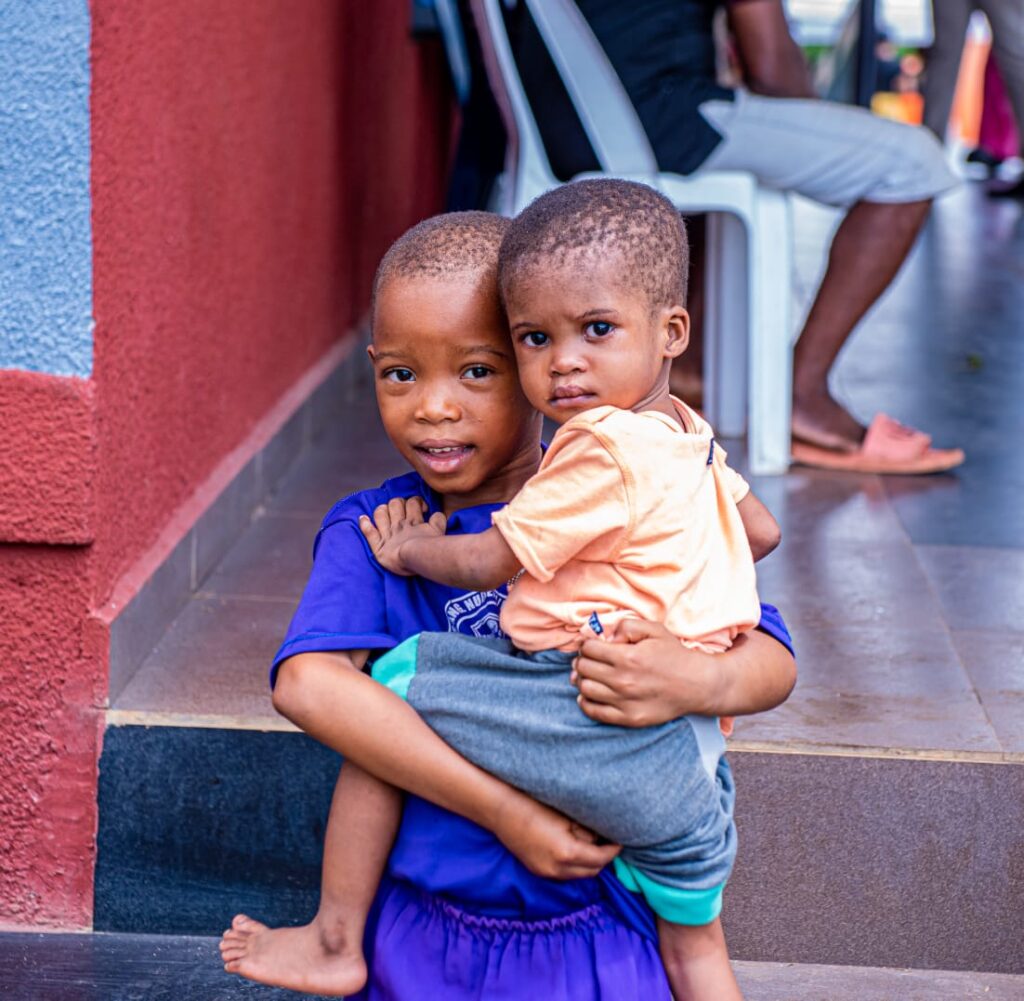
Children are not on the margins of Africa’s development story, they “are” the story. What happens to them in the next decade will determine the kind of continent Africa becomes in the next fifty years. That’s why they are Africa’s greatest asset and its greatest responsibility. What then happens if children are left behind?
When development fails to prioritize children, it mortgages the future, weakens long-term economic potential, and deepens societal vulnerability. But when children are intentionally prioritised, the returns extend across generations:
- Better educational outcomes which strengthen national productivity
- healthcare increases lifetime wellbeing and earning potential
- Child protection systems reduce vulnerability and social risk
- Early investments create healthier, more resilient societies
It’s time to treat child inclusion as infrastructure rather than charity.
Social Protection: A Safety Net for Sustainability
One of the most persistent failures in African development is the gap between program delivery and systems protection. Inclusive development requires both. It involves building systems strong enough to protect people when crises emerge.
Social protection mechanisms such as health insurance, financial safety nets, maternal support systems, community-based welfare structures and targeted interventions are not luxuries, they are essential for shielding vulnerable populations from shocks. Without these systems:
- Families fall deeper into poverty during crises
- Healthcare becomes inaccessible
- Economic progress is easily reversed
With them:
- Communities become more resilient
- Family stability improves
- Development gains become sustainable rather than temporary
This underscores the fact that social protection is not charity, it is the infrastructure for human security.
JEF’s Approach: Inclusion as Strategy
Development is not an act of generosity. It is the architecture of sustainable progress. That’s why Africa’s future will not be secured by growth alone, but by whether the most vulnerable who carry the continent’s greatest potential are no longer at the margins of progress, but at the centre of it.
At JEF, we don’t treat inclusion as a peripheral consideration or a value statement, it is the lens through which development is designed, implemented, and evaluated because Amina’s story isn’t an anomaly; it’s a warning that shows what happens when development measures reach without measuring equity. Our work is built on a simple principle: development only succeeds when the people most at risk of exclusion are not just included, but centred. In light of this, we focus on the following:
Empowering Women for Economic Independence
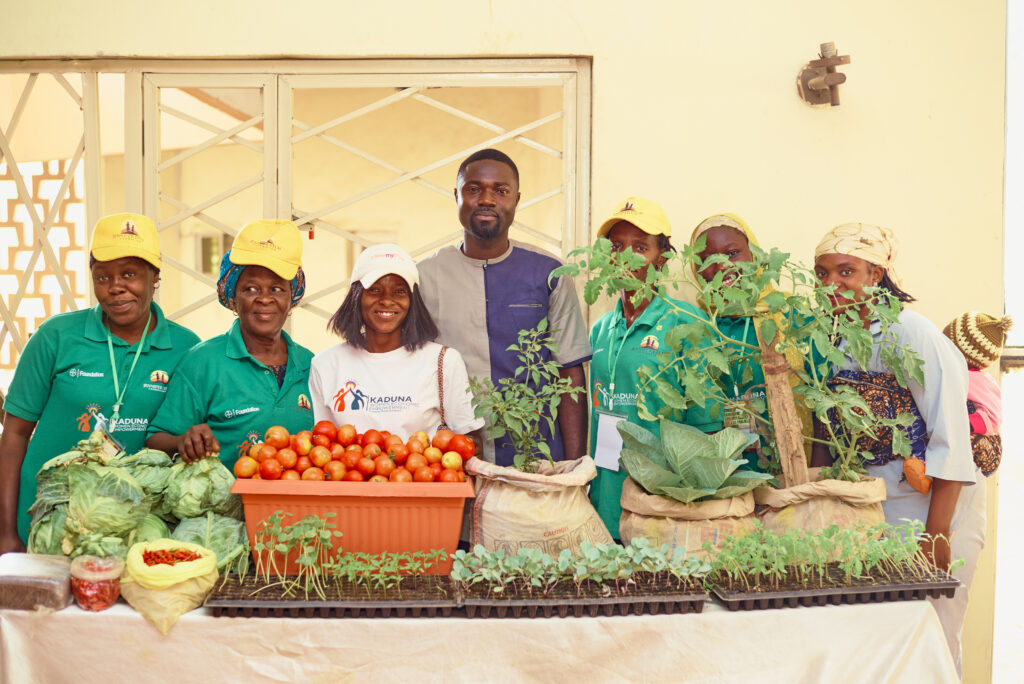
Through targeted economic empowerment initiatives designed around women’s actual barriers to productivity, JEF equips women with the tools to generate sustainable income moving beyond participation to productivity through vocational training and agricultural programs.
Expanding Access to Healthcare for Vulnerable Populations
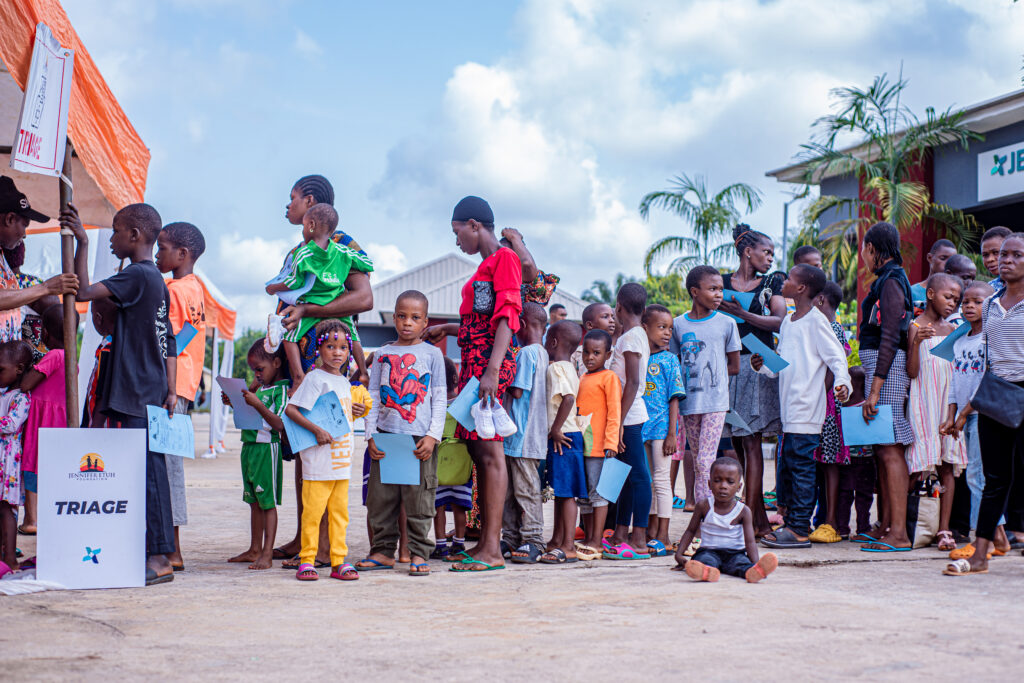
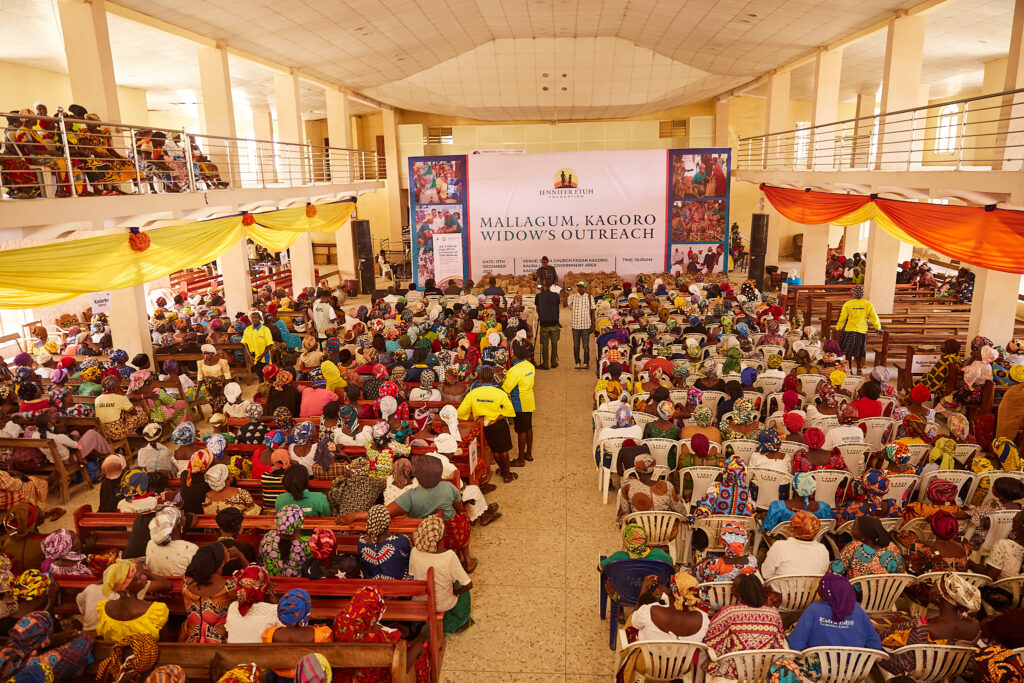
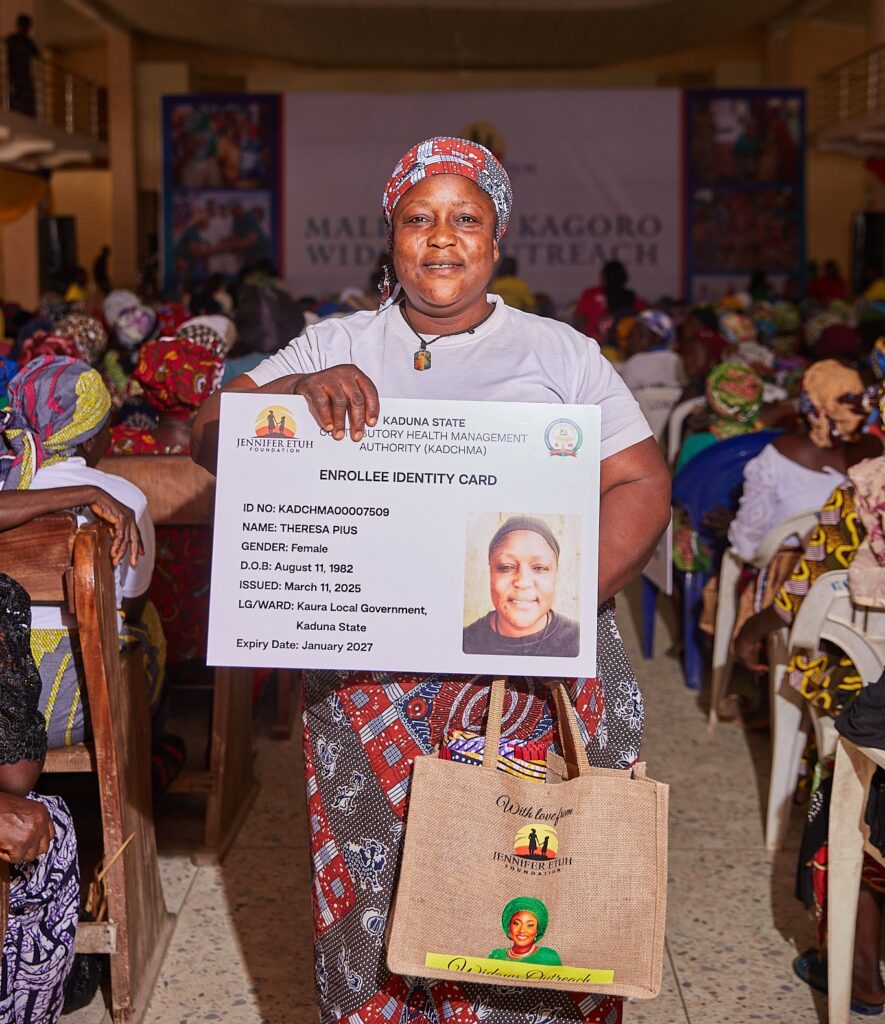
From free medical outreaches to health insurance enrolment for widows, our interventions ensure that healthcare is not a privilege, but a right especially for those most at risk which formal health systems consistently fail to serve.
Supporting Children Through Health and Community Interventions
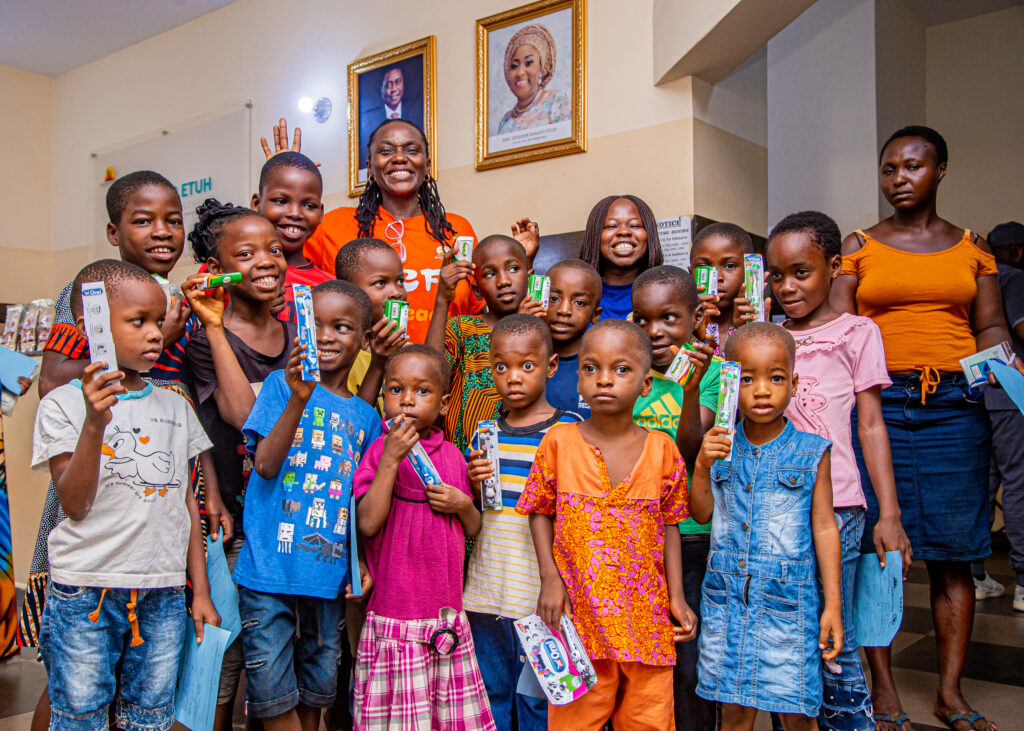
By integrating child-focused healthcare, education awareness, and family support systems into our outreach programs, we address both immediate needs and long-term wellbeing.
Reaching the Unreached
At different stages of our programs, we ask the question that nobody asked before the water facility in Amina’s village was built: “who does this not yet serve and why?” As a result, our programs are intentionally designed to include:
- Widows
- Persons with disabilities
- Pregnant women and children
- Rural and underserved communities
Because inclusion does not happen by accident, it must be designed deliberately.
Why Inclusion Must Be Measured
Inclusive development must be more than a principle, it must be measurable as principle without accountability becomes rhetoric. Key questions must guide every intervention:
- Who is being reached and who is not?
- Are outcomes equitable across different groups?
- Are the most vulnerable experiencing real, measurable, documented improvements?
Without this level of rigorous accountability, inclusion risks become a statistic on the sheets rather than a standard in the field.
A Sector-Wide Imperative
For NGOs, policymakers, and development partners, the message is clear: inclusive development is not optional. It is the standard by which meaningful progress is judged and it transcends GDP growth, infrastructure output, or program reach. It hinges on whether the girl walking in the dark before sunrise, the widow without healthcare access, and the child with a disability in a school that wasn’t built for him, were included not as statistical beneficiaries but as the focal point.
Programs that fail to account for gender disparities, child vulnerability, and social protection gaps will continue to produce “impressive reports” with incomplete and ultimately ineffective outcomes. The question was never whether Africa can develop, it is whether development will reach everyone and Amina is still waiting for her answer.
The Call to Inclusive Development
Africa is urbanising, innovating, and expanding at a pace that is genuinely historic and as she does so, one question must remain central: Who is being left behind and what are we doing about it? We cannot answer this question alone because inclusive development requires collective effort. Hence, we invite:
- NGOs and advocates to design programs that champion equity as a core development principle
- Partners and funders to invest in evidence-driven interventions that prioritize equity alongside scale as well as provide systems protection
- Stakeholders across sectors to measure impact across different population groups
- Societies to recognise that sustainable progress can never be built on selective inclusion.
At JEF, we are committed to building systems and interventions that ensure no one is invisible and no one is left behind because when development includes everyone,
progress becomes not just visible but just, sustainable, and transformative.
Learn more about our work in healthcare, economic empowerment, and education, and join us in building development that leaves no one behind.
References
- Reuters – Closing gender gap could lift global GDP more than 20%, World Bank says
- Reuters – Africa feeding 20 million more children with school meals, WFP says
- United Nations Geneva – UNICEF: 20% of the world’s children still trapped in extreme poverty
- UNICEF – The State of the World’s Children Report
- Nairametrics – Over 312 million children in Sub-Saharan Africa remain in extreme poverty
- UN-Water – UNICEF Report: State of the World’s Children 2025
- UNICEF Eastern and Southern Africa – Education and Disability Inclusion Data
- World Bank Gender Data Portal
- OECD Development Assistance Committee (DAC) Evaluation Criteria
- UN Women Africa – Women’s Economic Empowerment in Africa